Revolutionizing Customer Service for SMBs with AI-Powered Chatbots
A practical guide to deploying AI chatbots in SMBs, with a clear framework for scaling customer service, lowering costs, and competing on experience.

A practical guide to deploying AI chatbots in SMBs, with a clear framework for scaling customer service, lowering costs, and competing on experience.
When Customer Expectations Outpace Your Team
Customers today expect immediate, personalized, and always-on service. For small and medium-sized businesses (SMBs), this presents both a challenge and an opportunity. Lean teams and tight budgets make traditional service models difficult to scale, yet customer experience has become one of the strongest drivers of growth and differentiation.
Most SMBs face a critical service gap. Long response times, inconsistent answers, and limited support hours erode trust at the exact moments customers need it most. Closing this gap is essential for protecting reputation, retaining customers, and freeing teams to focus on higher-value work.
Research consistently shows that 90% of customers expect an immediate response to their queries, and more than half will switch brands after a poor service experience. For SMBs, intelligent customer service is no longer a competitive advantage, it is a baseline expectation.
Why AI-Powered Chatbots Are Critical for SMBs
1. Delivering Instant Response Customers expect answers in seconds, not hours. AI chatbots respond instantly across every channel, eliminating the wait time that drives abandonment.
2. Scaling Without Adding Headcount Chatbots handle unlimited conversations in parallel, supporting more customers across more hours without proportional growth in team size.
3. Achieving Competitive Parity Larger organizations deploy enterprise-grade service automation by default. AI chatbots let SMBs deliver the same speed and consistency at a fraction of the cost.
4. Capturing Revenue Around the Clock A significant share of buying decisions happen outside business hours. Chatbots qualify leads, answer pre-purchase questions, and convert interest into action 24/7.
5. Freeing Teams for High-Value Work By absorbing routine queries, chatbots redirect human time toward complex problems, relationships, and revenue-generating work.
What Makes a Chatbot Actually Work
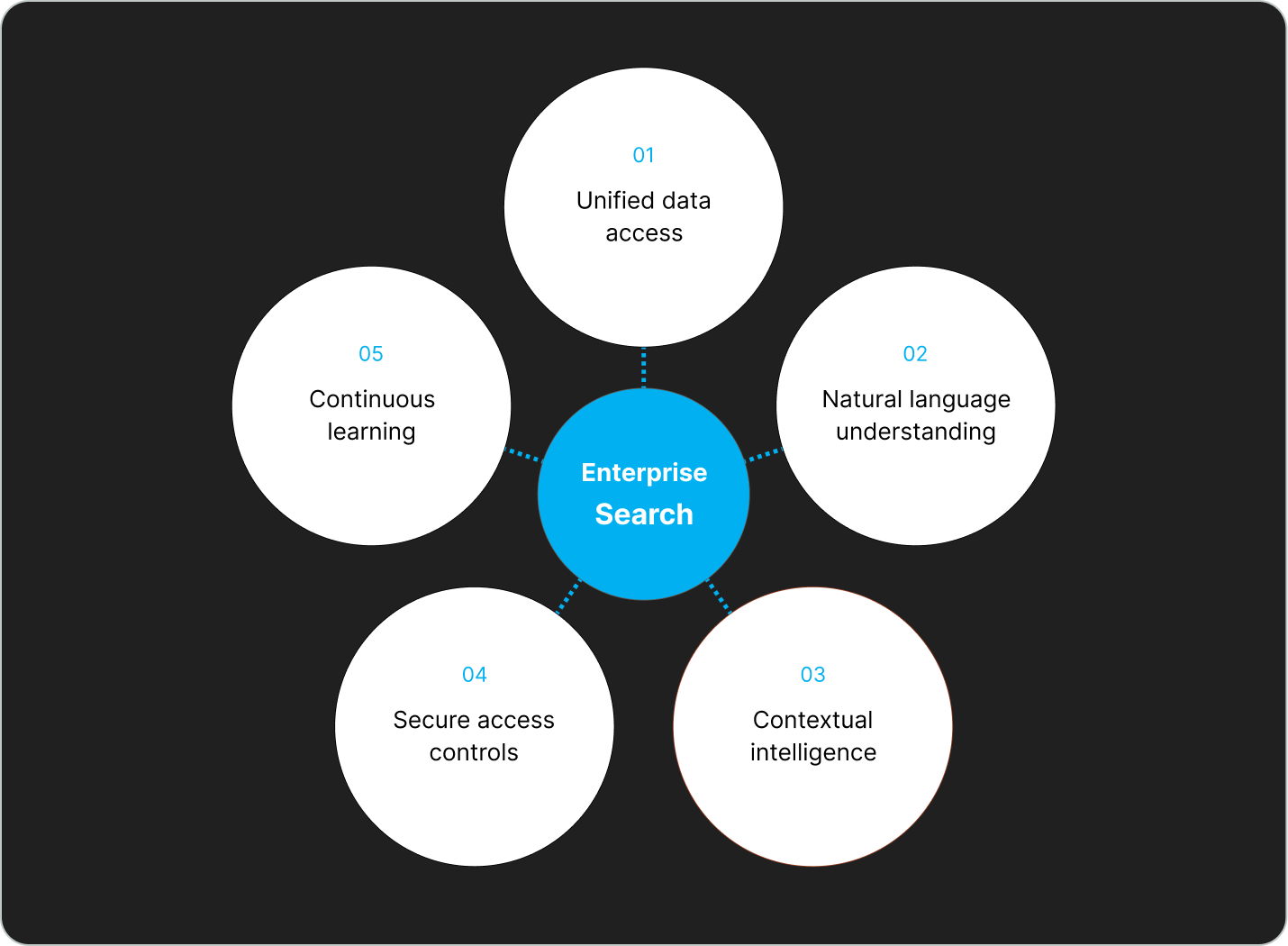
- Natural Language Understanding: Deploy chatbots that interpret intent, not just keywords, so customers feel heard rather than routed.
- Channel Integration: Connect the chatbot across the website, social platforms, and messaging apps so the experience is consistent wherever customers engage.
- Knowledge Base Alignment: Train the chatbot on accurate, up-to-date company information so responses reflect the brand and reduce misinformation.
- Smart Human Handoff: Build clear escalation paths to human agents for complex or sensitive queries, ensuring customers never hit a dead end.
- Continuous Learning: Use analytics and feedback loops to refine responses over time, improving accuracy and customer satisfaction with every interaction.
How to Roll Out a Chatbot in Your Business
Step 1: Audit Customer Service Workflows Evaluate the current service operation. Identify:
- High-volume, repetitive queries
- Common drop-off and abandonment points
- Hours and channels where coverage is weakest
- Tasks better suited to automation than human handling
Step 2: Define Use Cases and Success Metrics Align chatbot scope with specific business outcomes, such as faster response times, higher resolution rates, or increased lead capture. Set measurable targets from day one.
Step 3: Deploy and Integrate Roll out the chatbot across priority channels, integrate it with existing systems such as CRM and knowledge base tools, and train staff on the new workflow.
Step 4: Monitor, Refine, and Expand Track performance against the success metrics. Refine responses, expand use cases, and scale the chatbot's role as confidence and data accumulate.
West Point Society of Greater Houston: Instant Answers, Captured Leads
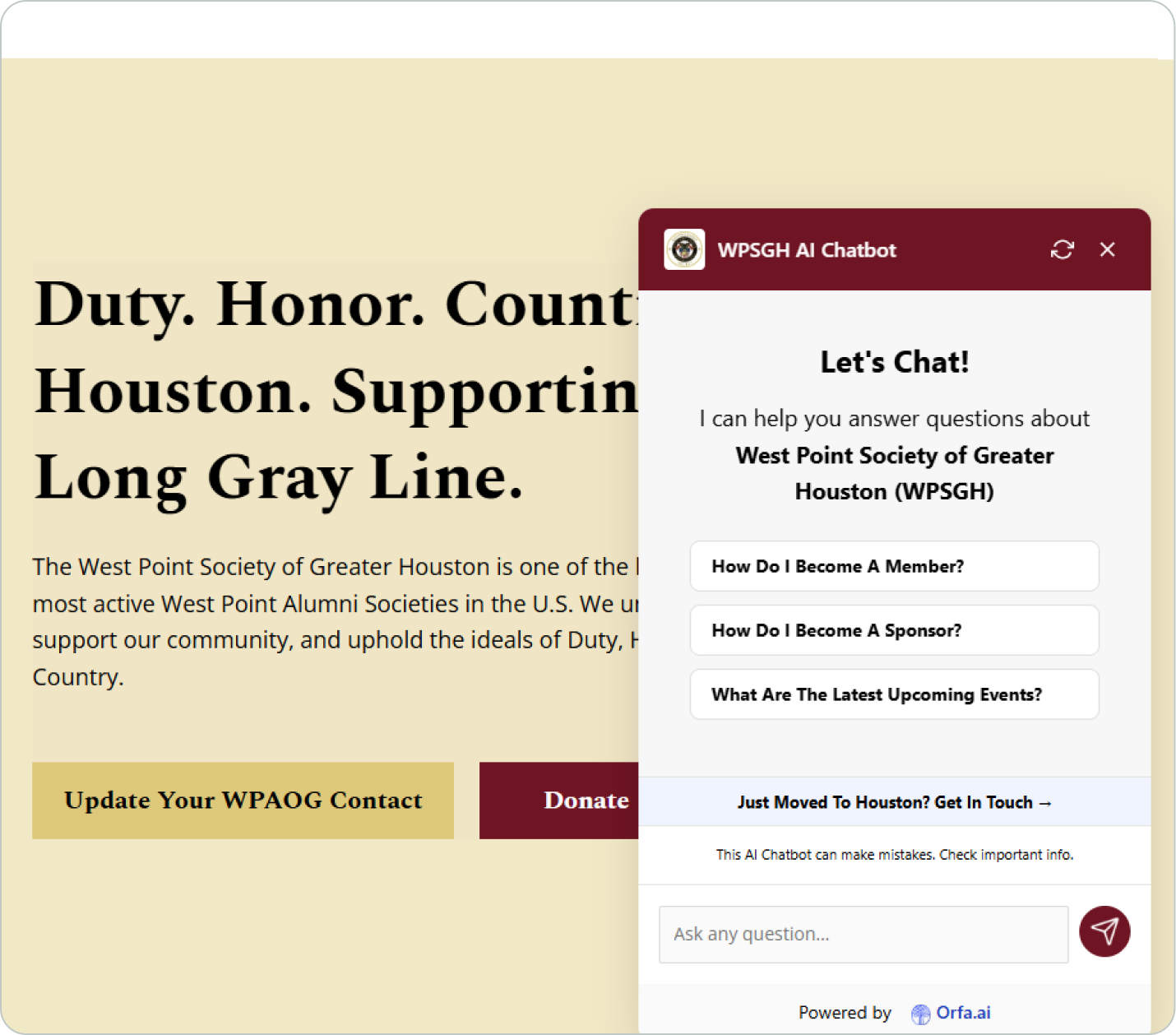
The West Point Society of Greater Houston (WPSGH) needed a way to engage visitors on its website around the clock, guide them to the right resources, and capture interest without manual follow-up.
Orfa AI deployed a customer-facing AI chatbot on the WPSGH website to instantly answer common questions, guide users to the right pages and resources, and collect emails for follow-up.
The impact:
- Faster responses for website visitors, any time of day
- Fewer repetitive inquiries handled by volunteers
- Improved lead capture to support event engagement
- Stronger pipeline for community and membership growth
The Future of AI-Powered Customer Service for SMBs
As customer expectations accelerate, AI-powered chatbots are no longer optional for SMBs. They are imperative. Businesses that deploy intelligent service automation today will be better positioned to scale efficiently, retain customers, and compete with larger players tomorrow.
Equipping teams with AI-driven service tools ensures organizations remain responsive, resilient, and relevant in an on-demand marketplace.
Ready to Transform Your Customer Service?
Orfa AI's chatbot solutions are built to meet the unique needs of SMBs, equipping businesses with the AI tools, frameworks, and support required to deliver always-on customer experiences.
Want to see how Orfa AI can help you save time and win more?
Schedule a demo today to see how Orfa AI can help you scale customer service, capture more leads, and grow with confidence.